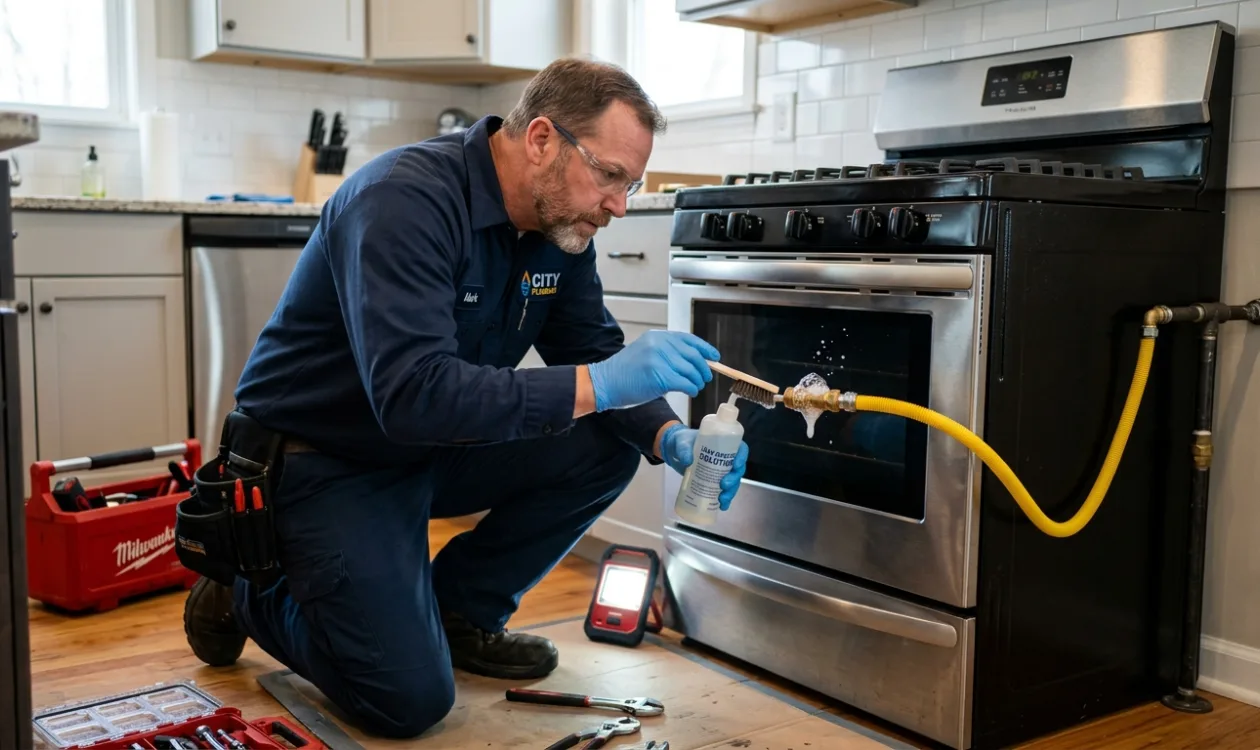
Gas line services in Lakewood, CA
Gas work is the one area of plumbing with no room for improvisation. If you can smell it, leave the house and call the utility first. Everything else on this page is what happens after that.
Talk to Someone About Gas Work
(562) 249-2037 · if you smell gas now, leave the house and call the utility first.If you smell gas right now
Leave the building. Do not switch anything on or off, including lights, and do not use your phone indoors. Do not try to find the leak. Once you are outside and clear, call the gas utility, and call 911 if the smell is strong or anyone feels unwell. The utility makes the property safe and shuts the meter. Plumbing work comes after that, not before.
What gas work on these houses actually covers
Four distinct jobs, and they have little in common beyond the pipe.
Leak testing and repair. The system is isolated and pressure tested to find whether it holds, and if it does not, the failed section is traced and replaced. On an original Lakewood system the pipe is black steel with threaded joints, and leaks are usually at a joint or at a fitting that has corroded, rather than in the middle of a run.
New appliance runs. A gas range where there was electric, a dryer, a fire pit, a pool heater, an outdoor grill, or a tankless water heater. Each needs its own correctly sized branch, and the sizing has to account for everything else on the system running at once.
Earthquake shutoff valves. A seismic gas shutoff valve closes the supply automatically when it senses shaking of sufficient force. Many older Lakewood houses have never had one fitted. It is a small, self-contained job.
Bringing existing work up to standard. Missing sediment traps, appliance connectors well past their service life, unsupported pipe, and shutoffs that have seized. These turn up constantly on houses that have been added to over seventy years.
Signs of a gas problem
- The smell itself. A rotten-egg odour is the odourant added to natural gas precisely so you notice it. Never ignore it, never wait to see if it goes away.
- A hissing sound near an appliance, a meter or an exposed pipe run.
- A pilot that will not stay lit on an appliance that used to be reliable.
- Yellow or lazy burner flames instead of crisp blue, which points at combustion rather than supply but needs looking at either way.
- Dead or patchy vegetation in a line over a buried gas run in the yard.
- Unexplained gas usage on the bill with no change in habits.
- Physical damage to exposed pipe in a garage, often from a vehicle or from stored items.
- Headaches or nausea indoors that improve outside. Leave and get it investigated immediately.
The Lakewood context
These houses were piped for a 1951 household: a range, a furnace, a water heater. That was the whole load. Seventy years of additions later, the same system may be feeding a dryer, a larger furnace, an outdoor grill and a pool heater, and the original pipe was never sized for it. This is why the honest first step on any new appliance request is a capacity calculation rather than a quote for a branch line.
It matters most with tankless water heaters. A tank heater draws gas modestly and steadily; a whole-house tankless unit needs several times that at the instant it fires. On a great many Lakewood properties the existing run cannot deliver it, and a new correctly sized line from the meter becomes the largest single item in the project. Better to know that on day one.
The second local point is seismic. California requires water heaters to be strapped, and while an automatic gas shutoff valve is a separate device with its own rules, the practical reality is that many original Lakewood houses have neither properly. Both are small jobs. Both are the kind of thing a plumber notices while in the garage for something else, and both are worth doing when they are noticed.
Third, garages. Because compact single-story plans put the furnace and water heater in the garage or an exterior closet, gas pipe here is often exposed, sometimes unsupported, and occasionally has a car parked against it. Protection and support are cheap and frequently missing.
One calculation decides whether a new appliance run is simple or a project.How gas work is carried out
Isolate and test
The system is isolated at the meter and pressure tested, which proves whether it holds before anyone starts opening joints.
Locate and calculate
A leak is traced to its section. A new appliance is sized against total demand, not just its own.
Pipe, support and trap
New runs in correct material and size, properly supported, with a shutoff and sediment trap at the appliance.
Test, permit, inspect
Pressure tested again, permitted and inspected, then appliances relit and combustion checked before anyone leaves.
Materials and the choices inside the job
Black steel
The traditional material and what almost every original Lakewood system is built from. Threaded, rigid, durable and repairable in sections. It is labour-intensive to run through a finished house, and its weakness is corrosion at threaded joints, particularly where pipe passes through concrete or sits in a damp garage corner.
Corrugated stainless steel tubing
Flexible tubing that can be routed through framing and attics with far fewer openings, which makes it attractive for adding an appliance run to a finished house. It has specific requirements around fittings, support, protection where it passes through framing and electrical bonding, and those requirements are not optional. Correctly installed it is excellent; casually installed it is not.
Repair or replace a run
A single failed joint on an otherwise sound system is a repair. A system where several joints are weeping, or where pipe is visibly corroded along its length, is telling you something broader. And if the run is undersized for what the house now uses, repairing it fixes the leak without fixing the actual problem.
What drives the price
- Length and route of the new run. Meter to garage is straightforward; meter to a far corner of the house is not.
- Whether the system needs upsizing. The single biggest variable on new appliance work.
- Access. Exposed garage pipe is quick. Concealed runs through finished walls and attics are not.
- Material choice and the fittings and protection it requires.
- How much testing is involved in tracing an intermittent leak.
- Permit and inspection, which gas work requires and which you want.
- Extras taken at the same time, such as a seismic shutoff valve, new appliance connectors or a missing sediment trap.
Why the permit is not optional here
Gas is the one area where the inspection is genuinely protecting you rather than satisfying paperwork. An inspector checks that the pressure test held, that the pipe is the right size for the load, that it is supported and protected, and that shutoffs and sediment traps are where they should be. Those are exactly the things a rushed job omits, and the consequence of omitting them is not an inconvenience.
It also matters at sale. Unpermitted gas work is one of the items that reliably causes problems in a transaction, and it is much cheaper to permit now than to retrofit documentation later.
What to do, and not do
If you smell gas: get everyone out, leave doors open behind you if you can do so without switching anything, and call the utility from outside. Do not flip switches, do not unplug anything, do not light a match, do not start the car in the garage. If the smell is faint and you are unsure, still call, because that is exactly what the utility line is for. Once the property has been made safe, note which appliances were affected and whether anything was recently worked on, since that narrows the search considerably.
Never test a gas line yourself
Utility first, always. Once the meter is off, the pipe work is straightforward and properly testable.
Gas line questions
The gas utility, from outside the building, and 911 as well if the smell is strong or anyone feels unwell. Do not switch anything on or off and do not use a phone indoors. The utility makes the property safe and shuts the meter. A plumbing pro then handles the pipe side: locating the failure, testing the system and repairing it so gas can be restored.
Many older Lakewood houses have never had one fitted, and it is a small self-contained job that closes the gas supply automatically when shaking reaches a set threshold. Whether one is required for your property depends on the circumstances and on current local requirements, which is a question to put to the installer for your specific address rather than to assume either way. Requirements can also be triggered by events such as a sale or a permitted remodel, so it is worth confirming with the city or county building department before you plan the work.
Often not without upsizing. A storage tank draws gas gently over a long period; a whole-house tankless unit needs several times that at the moment it fires. A 1950s system sized for a range, a furnace and a tank heater frequently cannot deliver that peak. It is measurable in one visit, and it is the calculation that decides the whole project cost.
The system is isolated and pressurised, and a gauge shows whether it holds. If it does not, the system is broken into sections to narrow down which run is losing, and joints are checked with a combustible gas detector and with solution applied to fittings. It is methodical rather than dramatic, and it is why testing is billed as its own step.
A short capped drop just before the appliance connection that catches debris and moisture before it reaches the appliance valve. They are routinely fitted now and routinely missing on older installations. It is inexpensive to add while an appliance connection is being worked on, and it protects the appliance control that is the expensive part.
Yes. New gas piping, replacing a run, and adding an appliance line are all permitted, inspected work. This is the area where inspection is most worth having rather than least, because it independently verifies the pressure test, the pipe sizing, the support and the shutoffs. Unpermitted gas work also causes real problems at sale.
Yes, and it is a common request. The pipe has to be rated and installed for exterior use, protected where it emerges, and fitted with its own shutoff, and the capacity check applies just as it does indoors. It is worth doing at the same time as any other gas work, since much of the cost is mobilisation and testing.
Yes. Flexible appliance connectors have a service life and older ones can crack or corrode, particularly behind a range or dryer that has been moved a few times. They are cheap, they are the most-handled part of the system, and replacing them during any other gas visit is sensible rather than cautious.
Not usually a leak, but not to be ignored. Yellow or lazy flames point at a combustion problem: blocked burner ports, incorrect air adjustment, or debris. It is worth having looked at because incomplete combustion produces carbon monoxide. If it is accompanied by a smell of gas, treat it as a leak and call the utility.
Exposed pipe in a garage is normal; unsupported or unprotected pipe is not. What a plumber looks for is proper strapping at correct intervals, protection where a vehicle or stored items could strike it, and no corrosion where pipe meets concrete. These are small corrections that get made during any other visit and are easy to overlook otherwise.
Related gas and appliance work
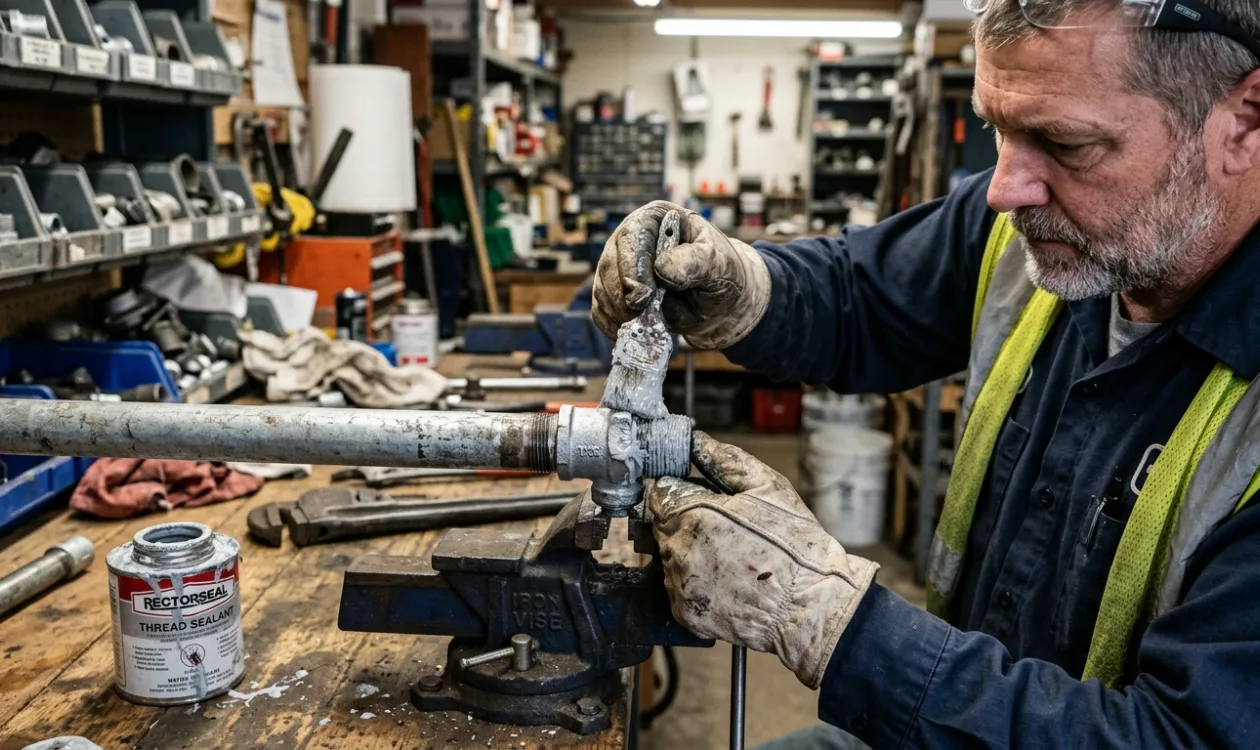
Gas work done the careful way
Pressure tested before and after, sized for the whole load, permitted and inspected.