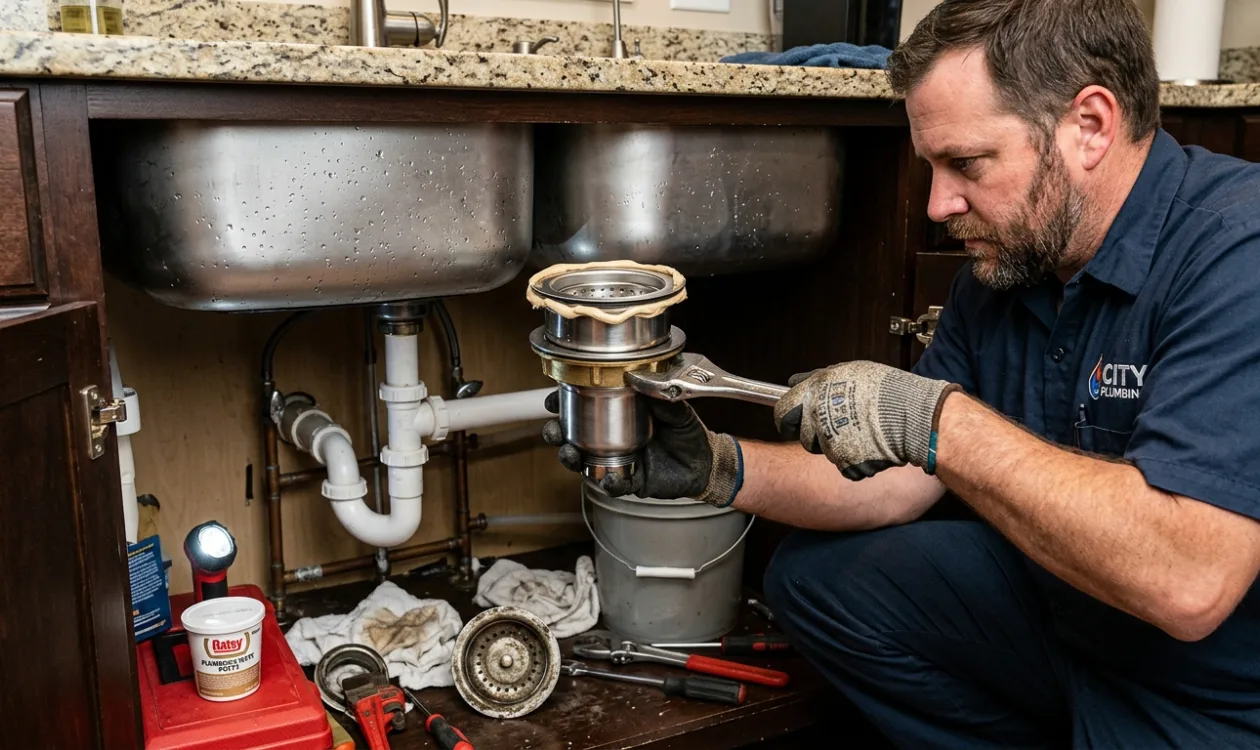
Plumber in Crest Gardens
Southern California water is hard, and hard water is unkind to water heaters. A large share of the Crest Gardens calls we route are a heater problem with scale somewhere behind it.
Get a Plumber to Crest Gardens
Local pros, no call centre in between.What hard water actually does
The supply across this part of Los Angeles County carries a significant load of dissolved calcium and magnesium. That is not a health problem and it is not unusual, but it has consequences for equipment, and the water heater absorbs most of them.
Heating the water precipitates those minerals out of solution. They settle to the bottom of the tank as a layer of sediment and bake onto the heating surface as scale. The layer insulates the burner from the water it is supposed to be heating, so the burner runs longer for the same result and the energy bill rises. It reduces the effective capacity of the tank, so hot water runs out sooner. It creates the popping and rumbling noise people describe as the heater sounding like a kettle, which is water flashing to steam underneath the sediment. And it puts thermal stress on the tank that shortens its life.
The same minerals scale up fixtures, tap aerators, shower heads and the internals of mixing valves, which is why a house here can develop a weak shower with no change to the pipework at all.
The one bit of maintenance that pays
Flushing the tank periodically removes sediment before it consolidates into a hard layer. It is unglamorous, it is inexpensive, and it is the single highest-value piece of preventive plumbing maintenance available to a house in this area. A heater flushed on a sensible schedule will generally outlast an identical one that was never touched by a meaningful margin.
The other component worth knowing about is the anode rod, a sacrificial metal rod inside the tank that corrodes deliberately so the steel tank does not. It is consumable. Once it is exhausted, the tank itself starts to go, and by the time that produces visible symptoms the tank is finished. Checking it during a service visit is a small job with a long payoff.
Repair or replace
Some failures are repairs and some are not, and the distinction is fairly clear. A failed thermocouple, a faulty gas control valve, a burnt-out element, a broken thermostat or a leaking temperature and pressure relief valve are all component replacements on a tank that is otherwise sound.
A tank leaking from the body itself is not repairable. Water appearing from the shell means the steel has corroded through, and no sealant or patch changes that outcome. At that point the only question is what replaces it and how quickly it can be fitted. Age matters too: pouring money into components on a tank well past its expected service life is usually throwing good money after bad, and an honest plumber will say so rather than sell you the repair.
Describe the noise or the fault and get a real answer.What Crest Gardens calls in most
Hot water and water quality lead here, with the fixture work that follows from the same cause.
Is treating the water worth it
A softener exchanges the hardness minerals for sodium and stops scale forming downstream of it, which protects the heater, the fixtures and every appliance that takes hot water. A filtration system addresses taste, odour and particulates, which is a different problem with a different solution. They are frequently confused and sometimes sold together when only one is needed.
Whether it is worth it depends on what you are protecting and how long you plan to stay. A household about to fit a new water heater and replace bathroom fixtures has a much stronger case than one planning to sell within the year. Sizing matters as well: a unit too small for the household regenerates constantly and wears out early, and a unit oversized for it is money spent for nothing. A plumber should size it against your actual water use, not against a bracket on a box.
Tankless, honestly
Tankless heaters are genuinely good and they are not a universal upgrade. They deliver continuous hot water and take up far less space, which suits a household that runs out of hot water in the mornings. What they need is adequate gas supply capacity, appropriate venting and, in hard water areas specifically, periodic descaling to keep the heat exchanger clear. That last point is not optional here, and a tankless unit installed and then ignored in this water will disappoint.
The feasibility question comes before the sales question. If the existing gas line cannot deliver the required capacity at peak, that upgrade is part of the job and belongs in the quote from the start rather than appearing later as a surprise.
Rumbling tank, or hot water that runs out early
Both are sediment symptoms rather than mysteries, and both are worth a call before the tank decides the matter for you. If you can tell us the approximate age of the heater and what noise it makes, the conversation gets a lot more useful a lot faster.
Reading a water quality report for your own house
Your water provider publishes an annual quality report, and it is the right starting point for any conversation about treatment in Crest Gardens. It is also easy to misread, because it describes the supply as delivered to the area rather than the water arriving at your particular tap. What happens between the main and your kitchen depends on your own pipe, your water heater and how long water sits in the line.
The number most people are looking for is hardness, usually given in grains per gallon or in parts per million. That figure tells you how much scale you can expect and therefore whether softening is worth the running cost, which is a genuine cost in salt and in water used for regeneration. It does not tell you anything about taste, odour or sediment, which are separate problems with separate fixes.
It is worth being clear with yourself about what you actually want to change before anyone quotes for equipment. Scale on fixtures and inside the water heater is a hardness problem. A chlorine taste is a carbon filtration question. Grit in the aerators is usually sediment and often traceable to work on the main rather than anything in your house. Treating all three with one large appliance is how people end up with a system that is bigger and more expensive than the problem.
No hot water this morning
Same-day water heater repairs and replacements across Crest Gardens.
Crest Gardens hot water questions
Annually is the common recommendation, and in hard water it is a floor rather than a target. A tank that has never been flushed and is several years old should be looked at rather than flushed blindly, because disturbing a heavy consolidated sediment layer can occasionally expose a weakness that was being held together by it.
Water trapped beneath a layer of sediment on the tank bottom, flashing to steam and forcing its way out. It is a direct indicator of sediment build-up. It is not immediately dangerous, but it means the heater is working harder than it should and its remaining life is being consumed faster.
Manufacturers quote ranges, and hard water pushes real-world outcomes toward the lower end of them unless the tank has been maintained. Maintenance is genuinely the variable: two identical heaters installed the same week can differ by years depending on whether anyone ever flushed them.
Sediment occupying volume that used to hold water is the usual answer, so the tank is effectively smaller than its rated capacity. A failed lower element in an electric unit produces the same symptom. Both are diagnosable in one visit, and one of them is a cheap fix.
It should be looked at promptly. It can mean excess pressure in the system, an overheating tank, or simply a valve that has failed. The valve is a safety device and the correct response is diagnosis, never capping or plugging it. If it is discharging steam or hot water continuously, treat it as urgent.
Consider it if you regularly run out of hot water, want the floor space back, or are replacing an old unit anyway. Check first that the gas supply and venting can support it, and accept that periodic descaling is required in this water. If those are fine, it is a strong option. If the gas line needs upgrading, factor that into the comparison honestly.
No. It prevents further scale from forming but does nothing to what has already deposited. Existing aerators, shower heads and valve internals need cleaning or replacing separately. Doing both at once is the sensible sequence: treat the water, then restore the fixtures.
Softening exchanges hardness minerals for a small amount of sodium, and many households on softened supplies fit a separate drinking water tap or a filter at the kitchen sink for that reason. If anyone in the house is on a restricted sodium diet, discuss it before installing, and consider treating only the hot supply.
Commonly a failing thermocouple, which is an inexpensive part and a straightforward replacement. It can also be a venting or draught problem, which matters more because it concerns combustion. Either way, if you smell gas at any point, leave the house and call the gas utility before you call a plumber.
A like-for-like tank replacement is often achievable the same day when the unit is a standard size and the existing connections are compliant. Where the install needs bringing up to current requirements, for venting, strapping, relief discharge or the gas connection, it takes longer, and that work is not optional.
Nearby neighbourhoods we cover
Get the hot water sorted properly
Repairs, replacements, tankless conversions and water treatment across Crest Gardens.