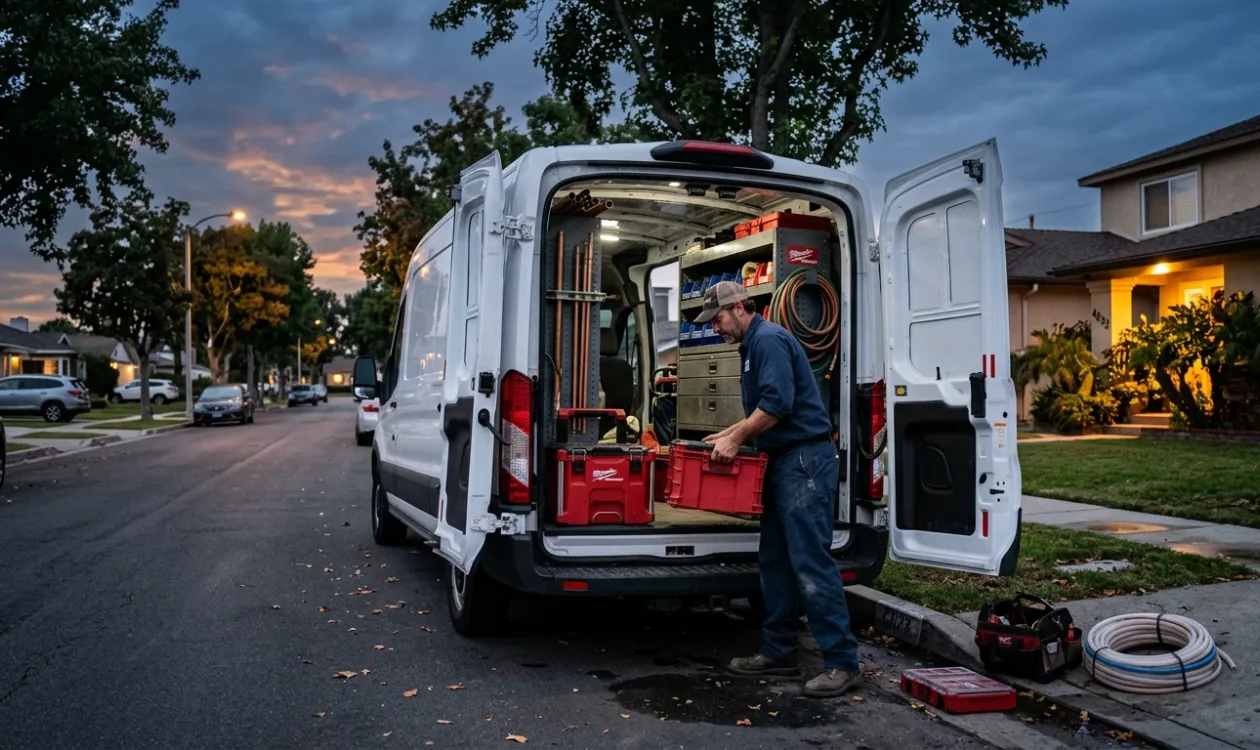
Emergency Plumbing
Burst lines, overflowing toilets, no water at all. Answered around the clock, including the hours nobody else answers.
See the page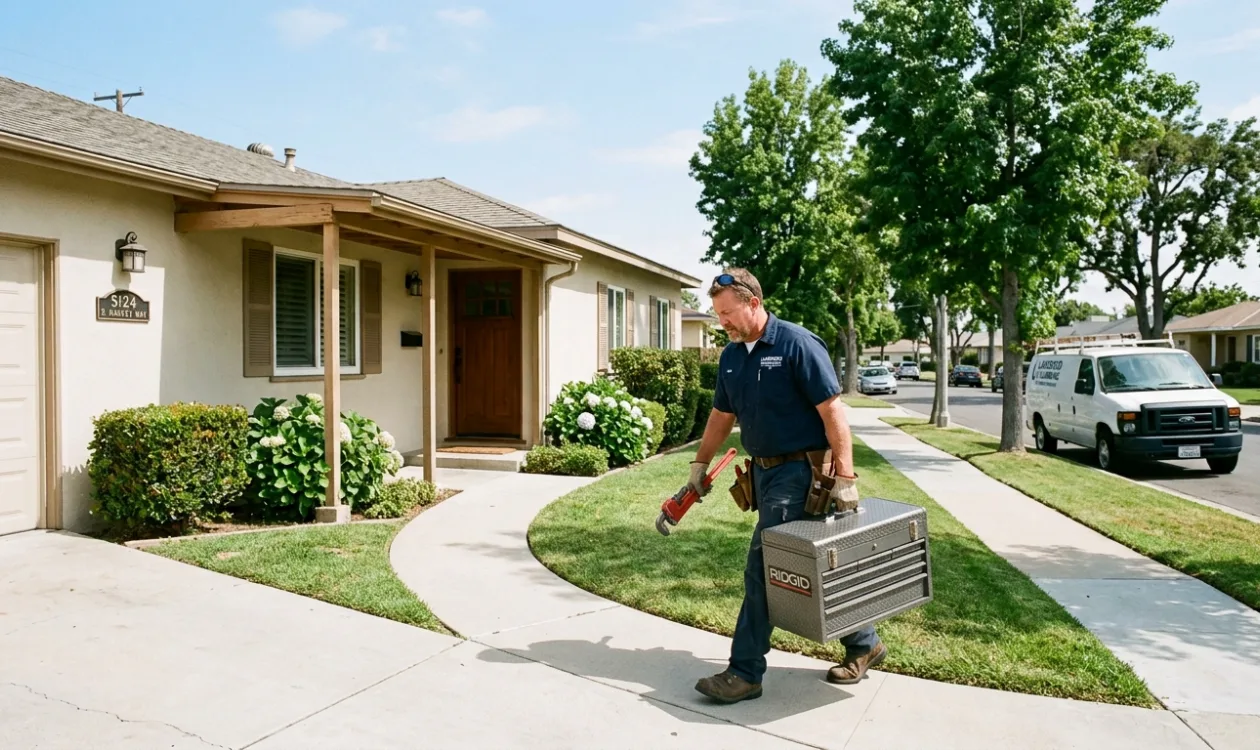
Slab leak under the hallway. Galvanized line finally giving up. Shower draining into the tub next door. Tell us what the house is doing and we’ll connect you with an experienced local plumber who has seen it on your street before.
Call(562) 249-2037 Answered 24 hours a day, seven days a week, a real person, not a queue.Nights, weekends, Thanksgiving. The phone is answered every hour of the year.
Active leaks and backups get connected now, not slotted into next week.
You hear the number before work starts. Nothing gets added on afterwards.
Pros who know what a 1950 tract house hides under its slab and its stucco.
Lakewood went up fast. Between 1950 and 1953 the tract crews were finishing houses at a pace that made national news, laying out a whole city of single-story ranch homes on flat ground between Long Beach and the 605. The plans were efficient, the construction was sound, and the plumbing was exactly what you would expect from 1951: galvanized steel supply lines, cast-iron drains inside the house, and clay sewer laterals running out under what are now enormous parkway trees.
Seventy-plus years later, that original system is in its failure window all at once. It is not that Lakewood houses were built badly. It is that a galvanized supply line has a service life, cast iron has a service life, and this entire city hit the end of both in the same decade. If your pressure has been fading, if the hot water runs rusty after a trip away, if a drain backs up every spring when the roots go looking for water, that is the age of the house talking, not bad luck.
The plumbers we connect you with work in these houses constantly. They know that the main shutoff is usually in a concrete box out at the parkway. They know which streets have the shallow laterals. They know that on a slab-on-grade house the real question is almost never can you find the leak, it is reroute overhead or open the slab, and which one actually makes sense for your floor plan and your budget.
Describe the symptom in your own words, no plumbing vocabulary required.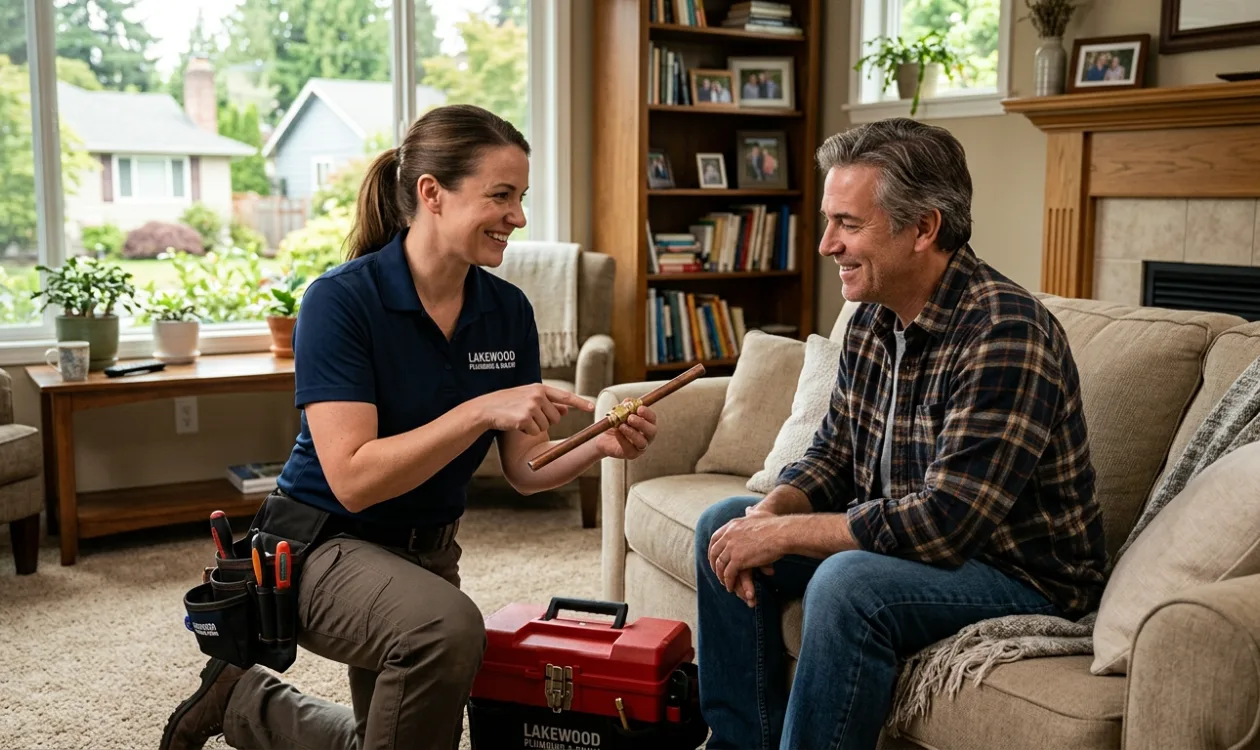 Built
1950–1953
Start with the six that come up most often in Lakewood, then the full list below. Every service has its own page explaining what actually happens, what it costs more or less depending on, and what to do while you wait.
Burst lines, overflowing toilets, no water at all. Answered around the clock, including the hours nobody else answers.
See the page
The signature Lakewood problem. Located electronically, then repaired by reroute or by opening the slab, whichever costs you less in the end.
See the page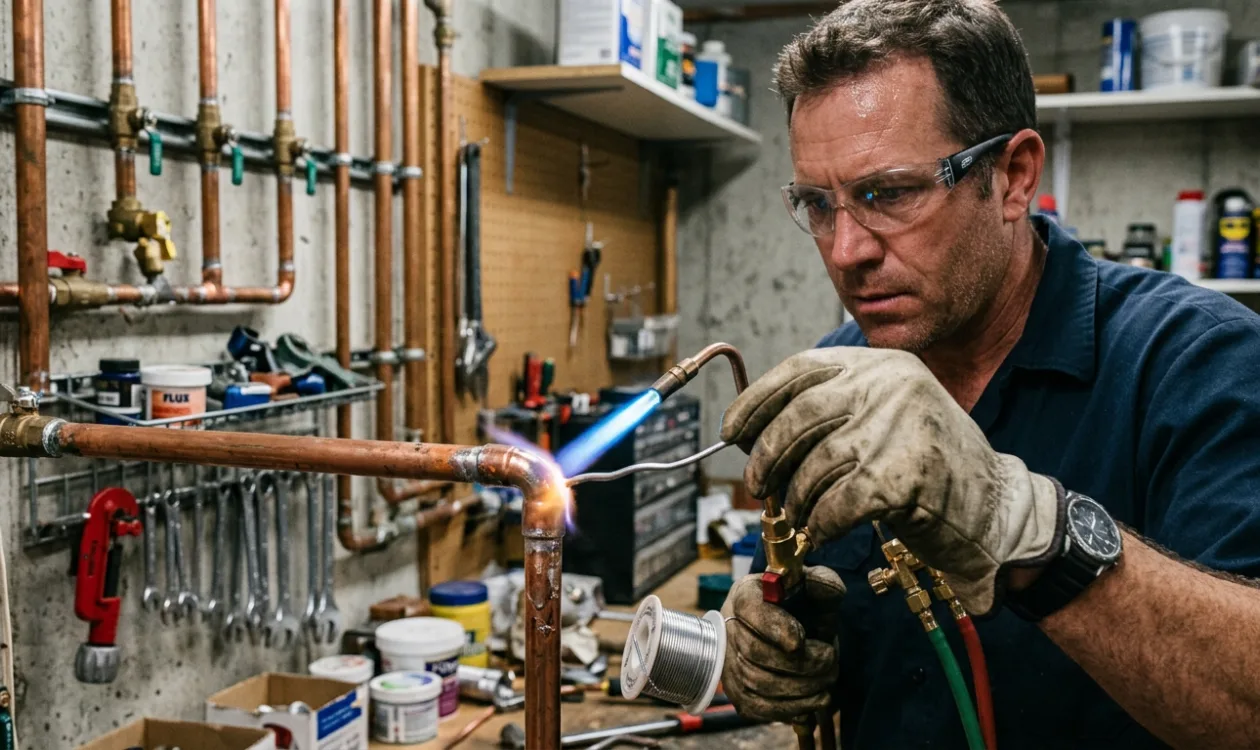
Replacing seventy-year-old galvanized steel with copper or PEX, room by room, usually in two to four days with the water back on each night.
See the page
Kitchen lines glazed with decades of grease, tub drains full of hair, laundry standpipes that overflow on the spin cycle.
See the page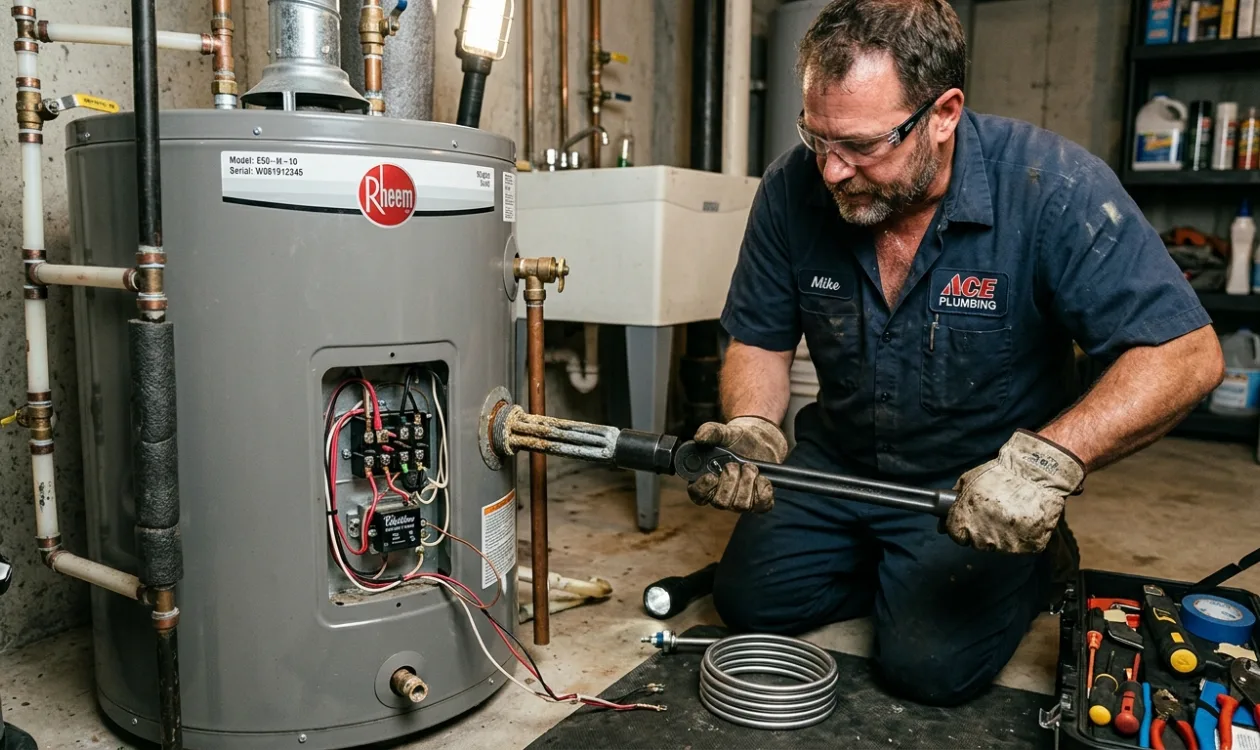
Pilots that will not hold, thermostats gone, tanks scaled solid by imported hard water. Garage and exterior-closet installs are standard here.
See the page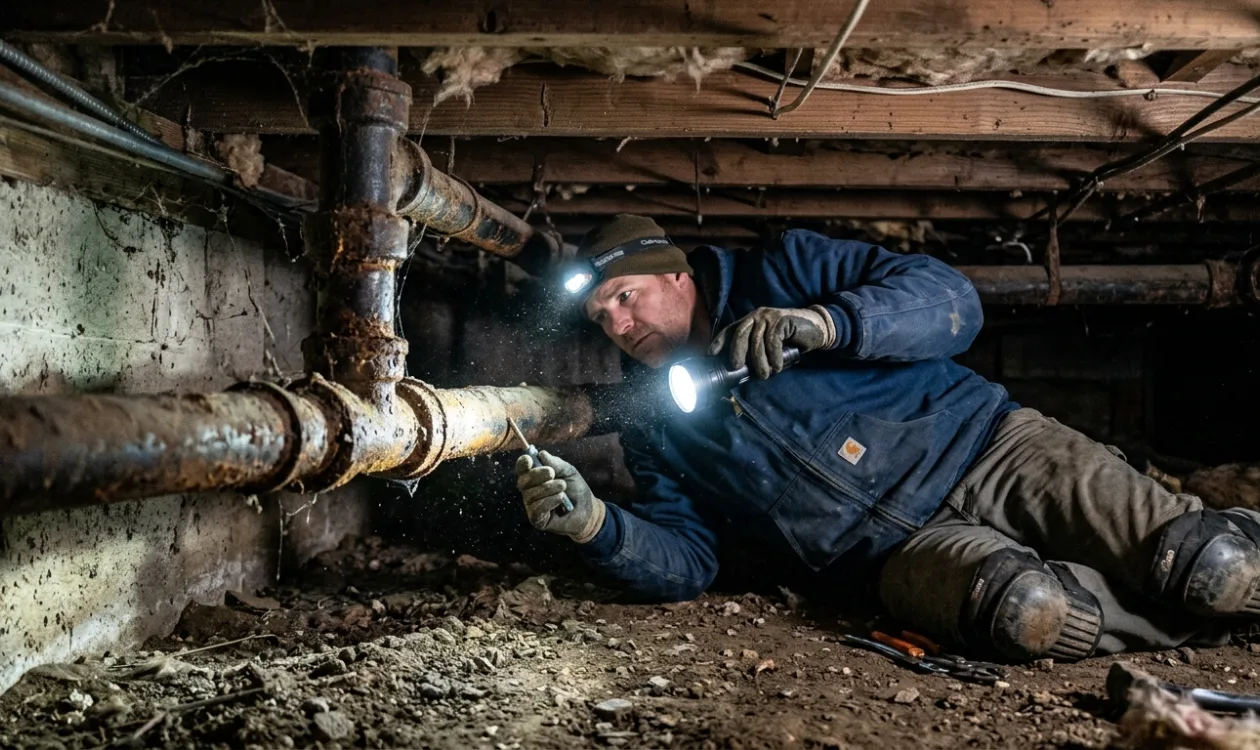
Clay and cast-iron laterals cracked by parkway tree roots, camera first, then spot repair, lining or replacement.
See the page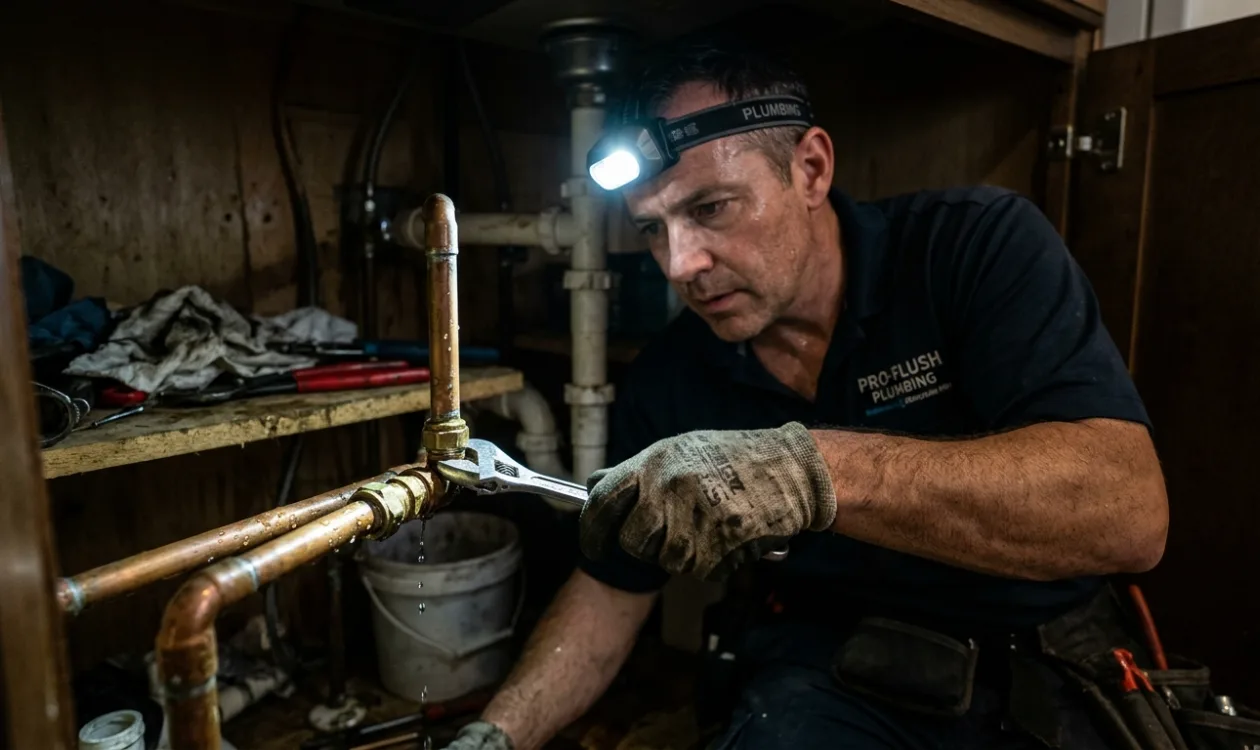
Split galvanized and copper lines shut off, cut back to sound pipe and rebuilt, with the opening closed properly afterwards.
See the page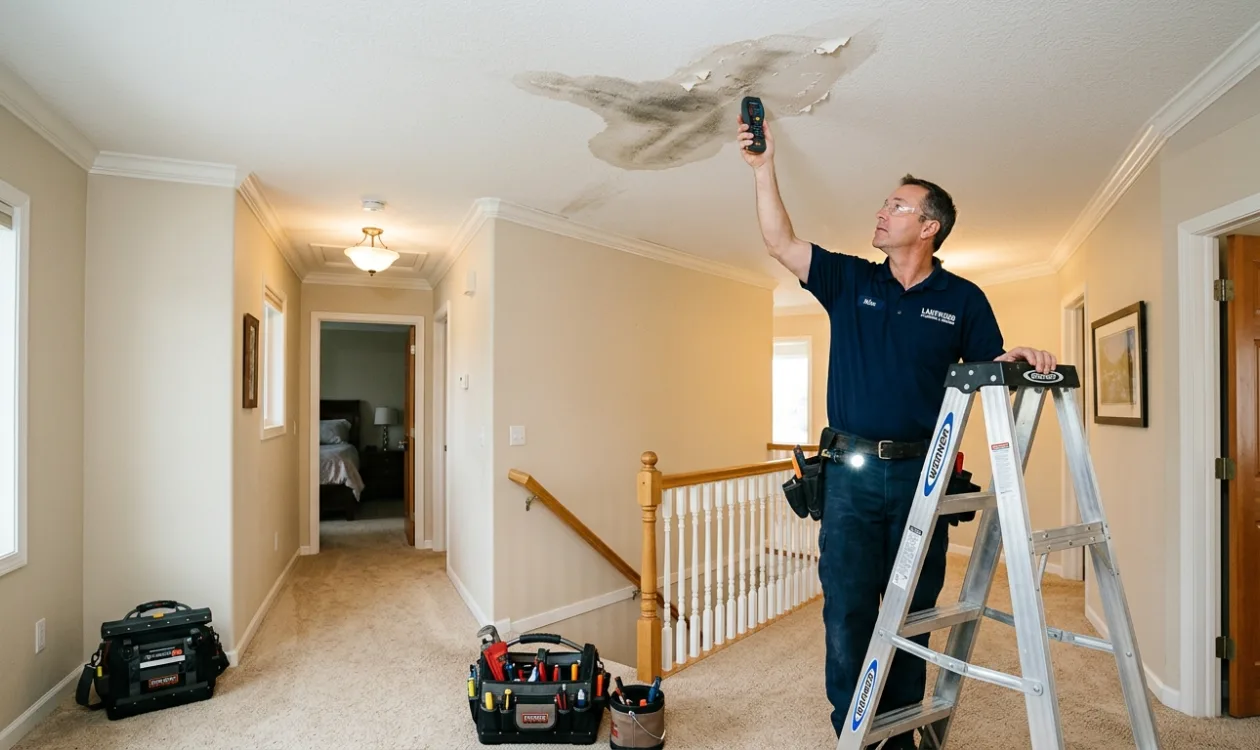
Acoustic, thermal and pressure methods that narrow the position down before anything gets cut open.
See the page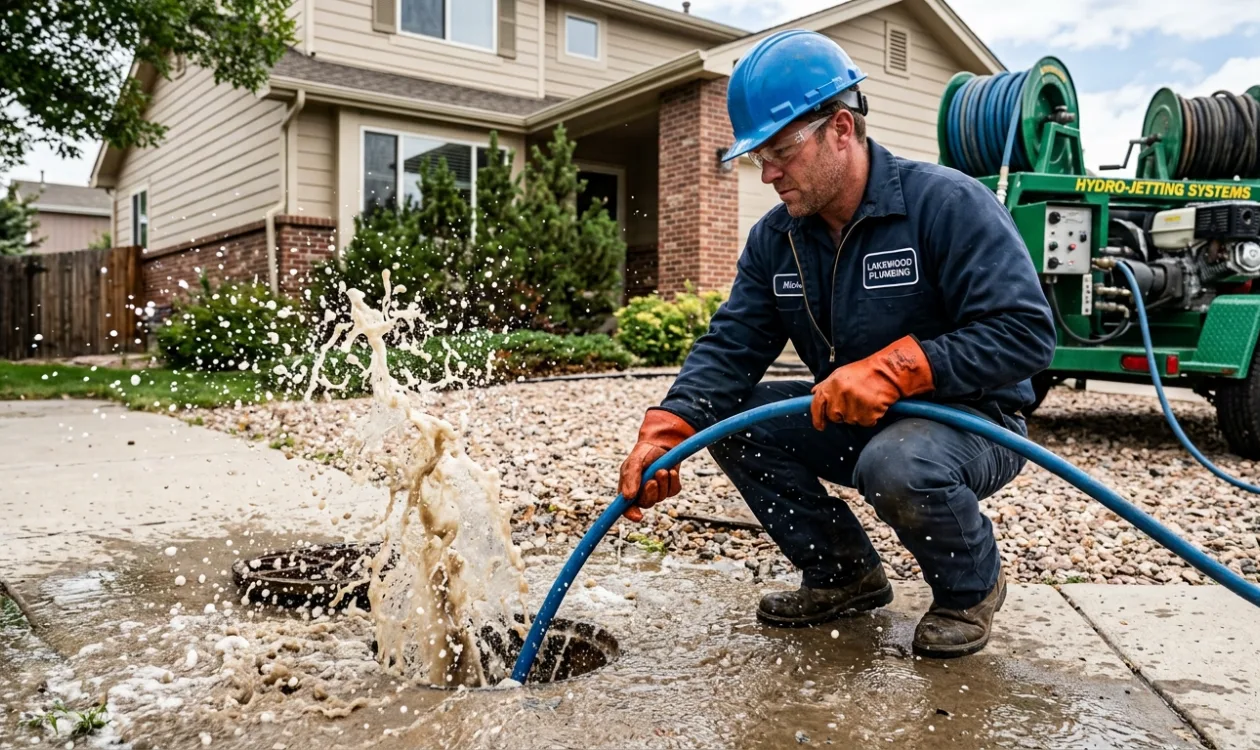
High-pressure scouring that takes the pipe wall back toward its original bore instead of boring through the blockage.
See the page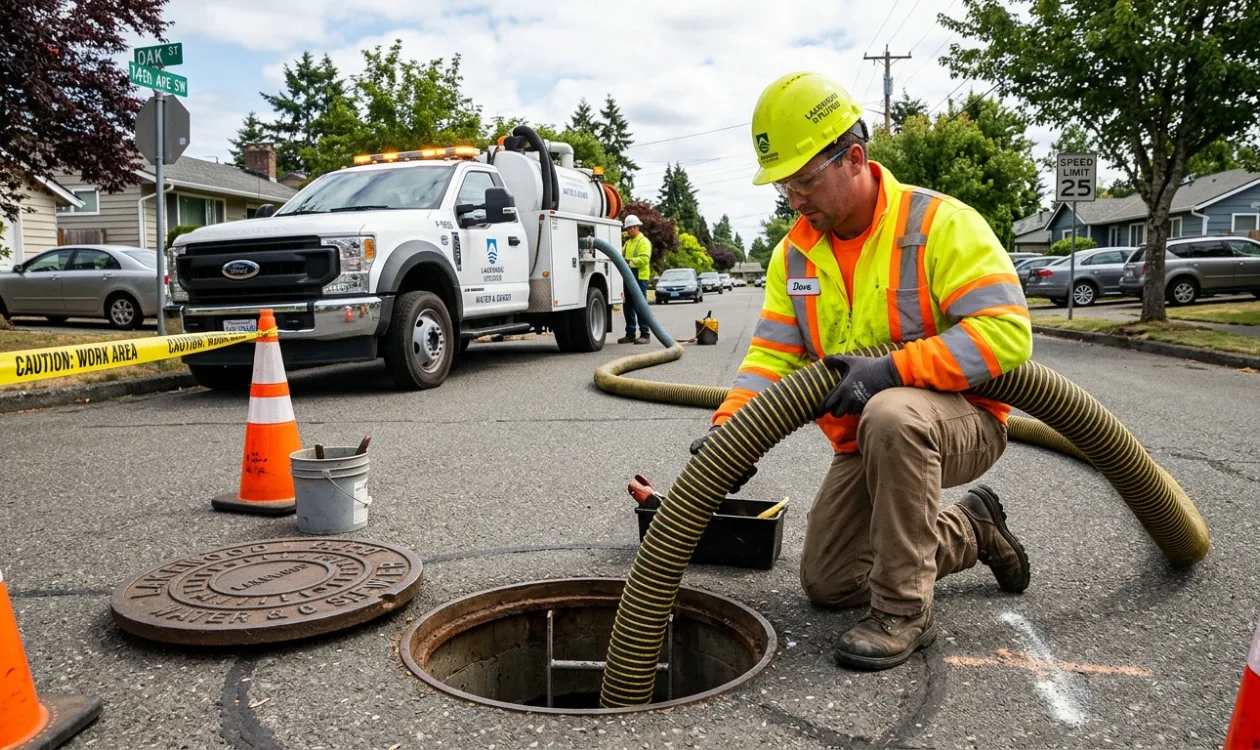
Lining and pipe bursting that seal a root-damaged lateral without trenching the driveway.
See the page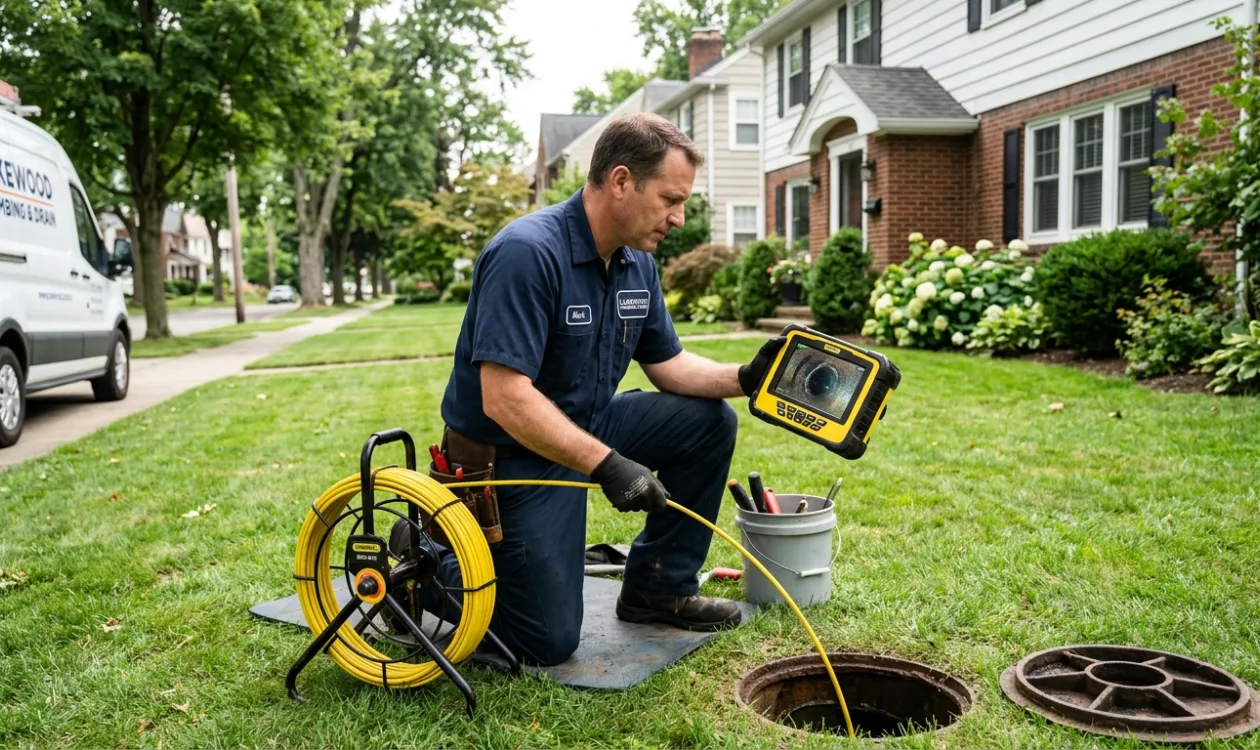
A recorded look inside the clay or cast-iron lateral before anyone quotes a repair.
See the page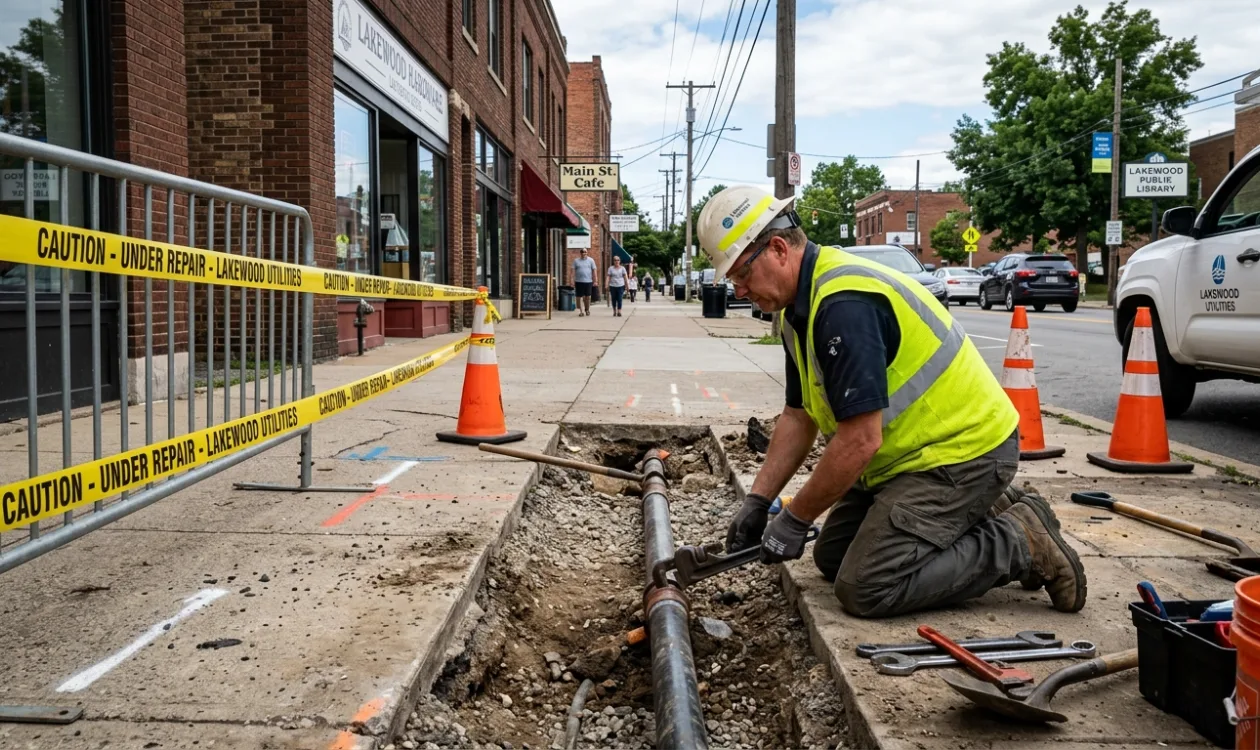
The run from the parkway meter to the house traced, then repaired or replaced.
See the page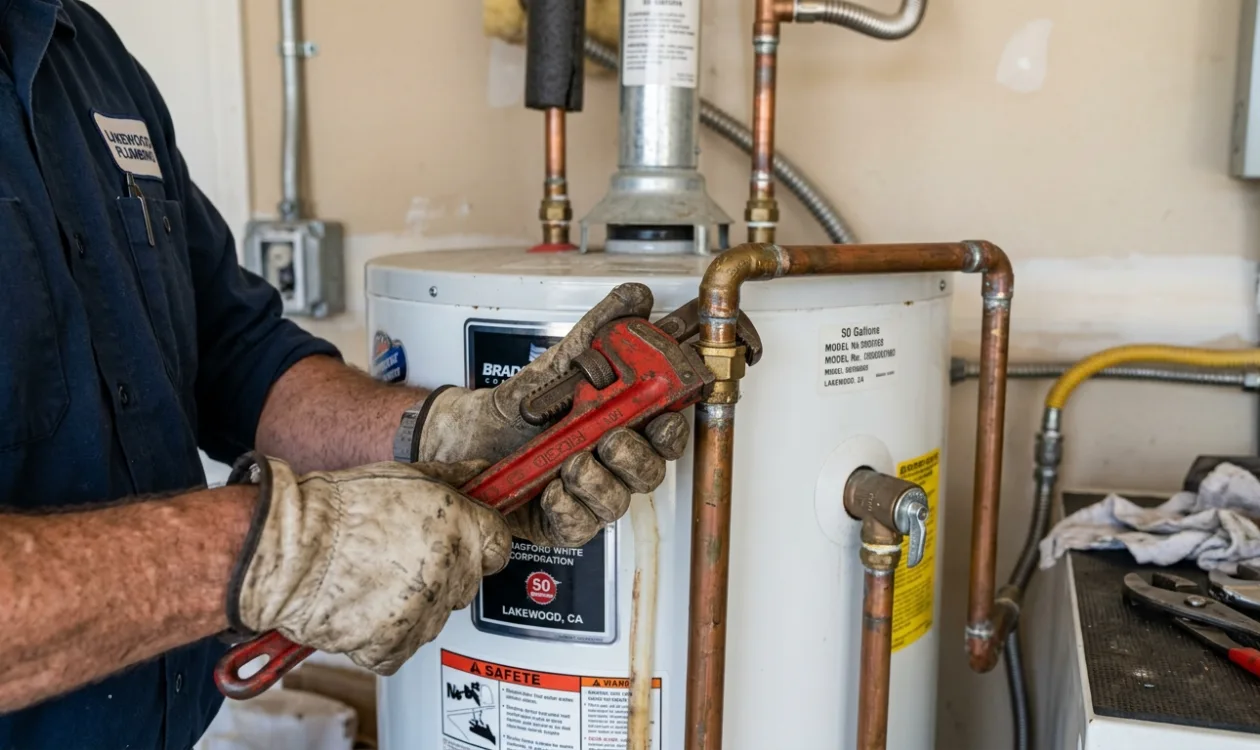
Tank swaps done to current strapping, venting and expansion rules, permitted and inspected.
See the page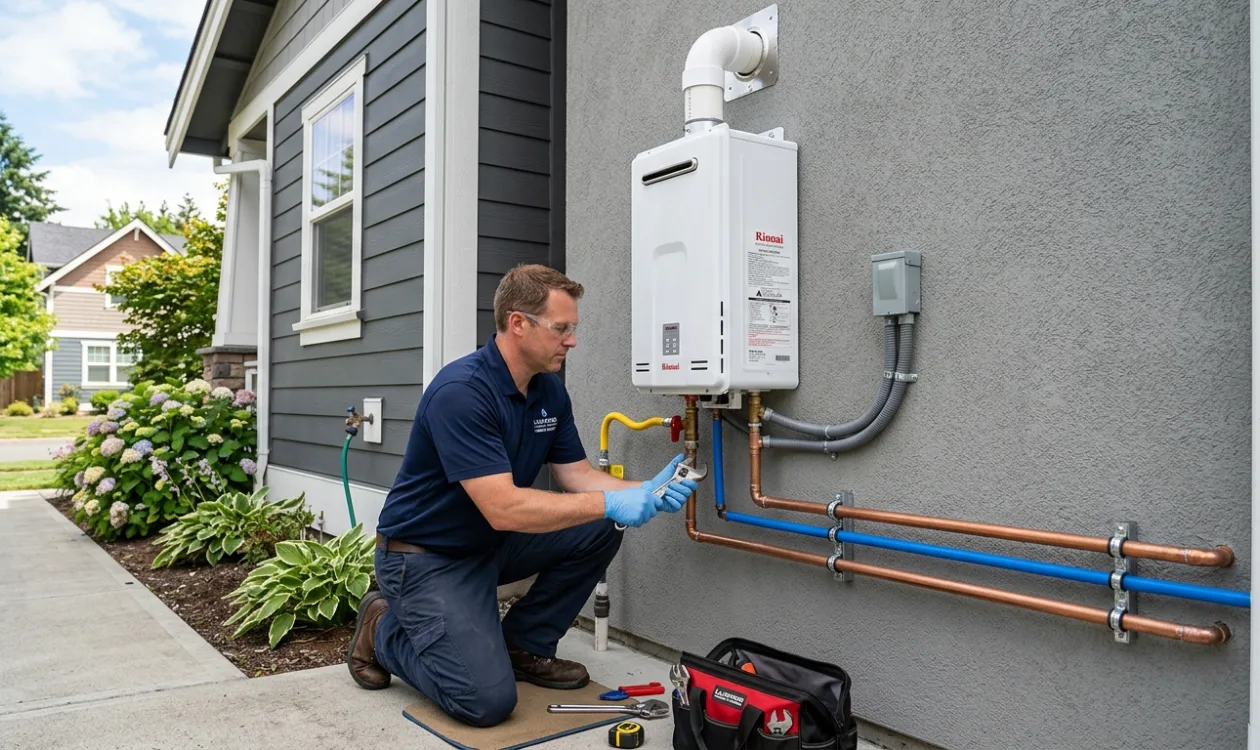
Gas sizing, venting and a descaling plan that suits water this hard.
See the page
Running, rocking, leaking at the base, or past the point where another repair makes sense.
See the page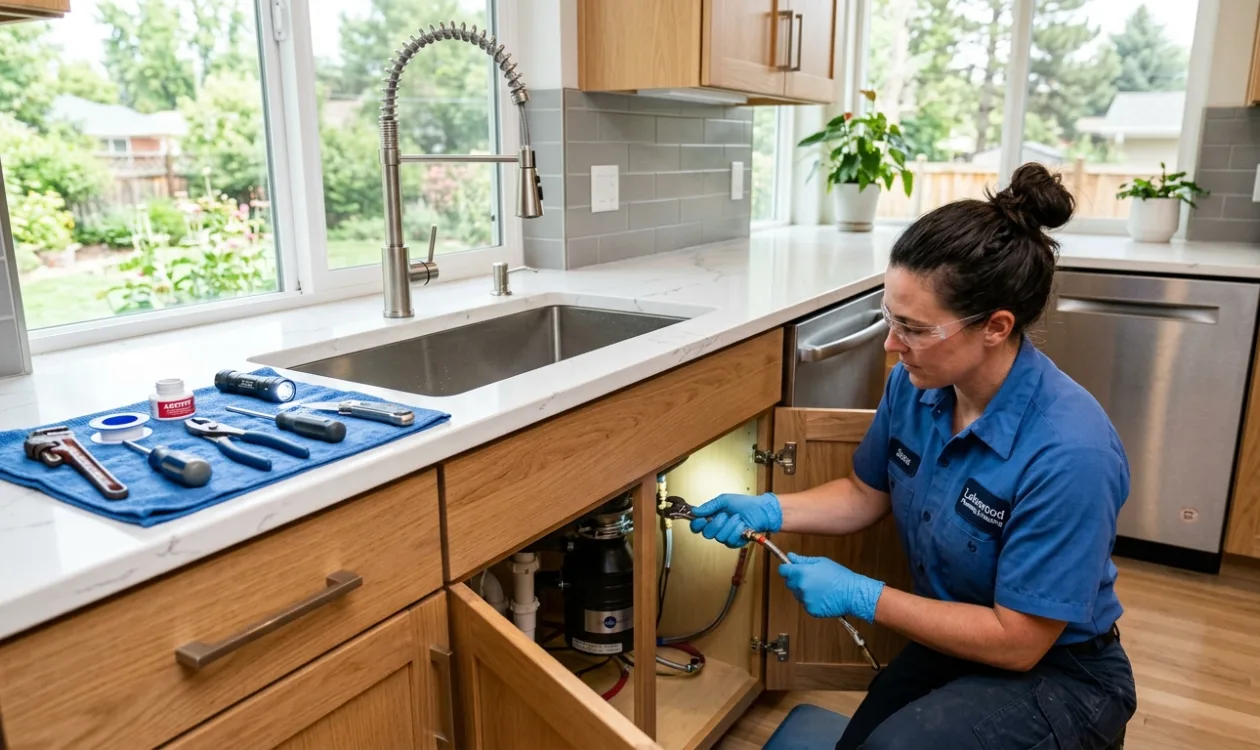
New taps fitted to old angle stops and 1950s supply lines, with the stops replaced where they need it.
See the page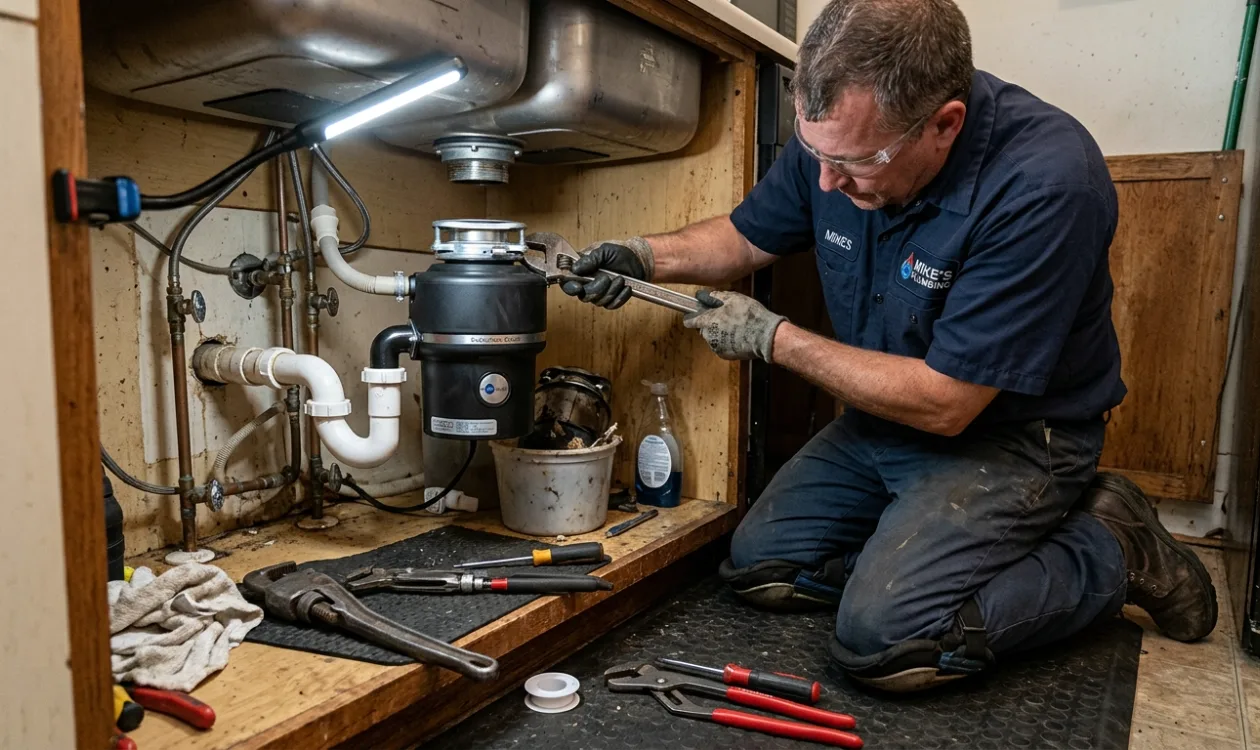
Jams, humming units, leaks at the flange, and clean replacements when the unit is finished.
See the page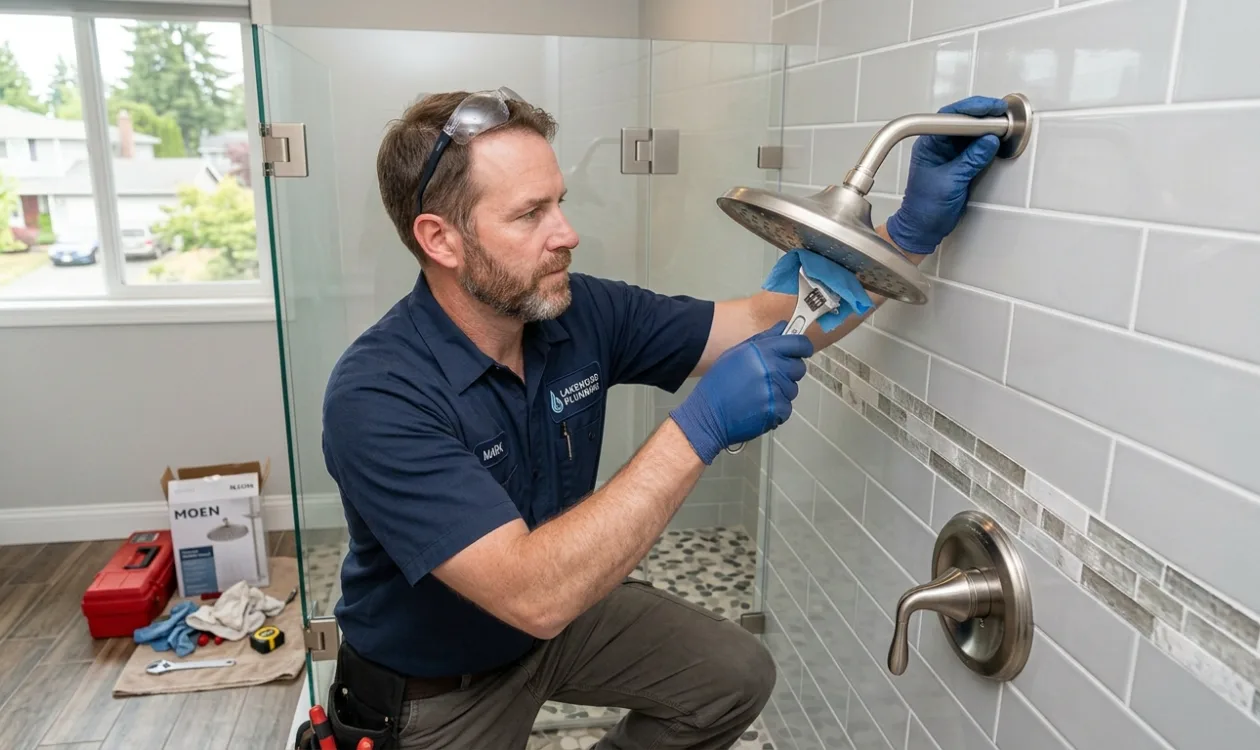
Valves, cartridges, diverters, drains and tub-to-shower conversions.
See the page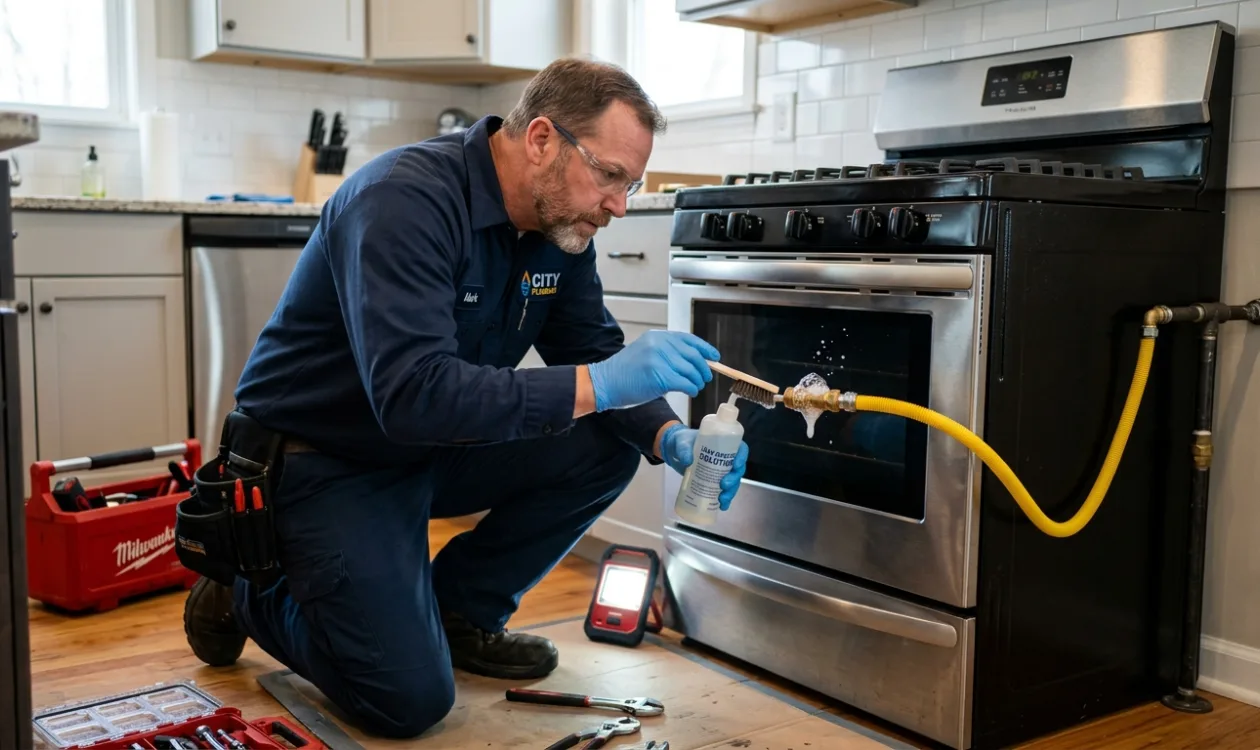
Leak testing, new appliance runs, repairs and seismic shutoff valves, permitted and inspected.
See the page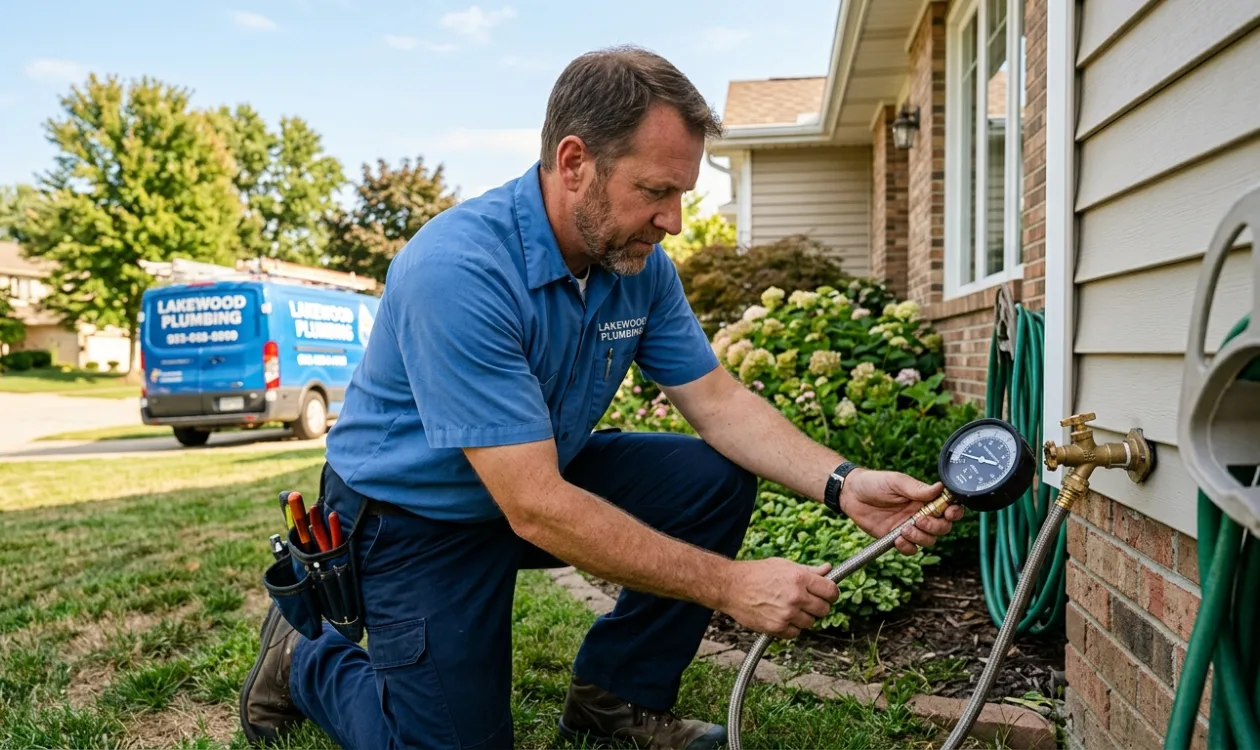
Pressure measured first, then the regulator adjusted or replaced to protect old pipe.
See the page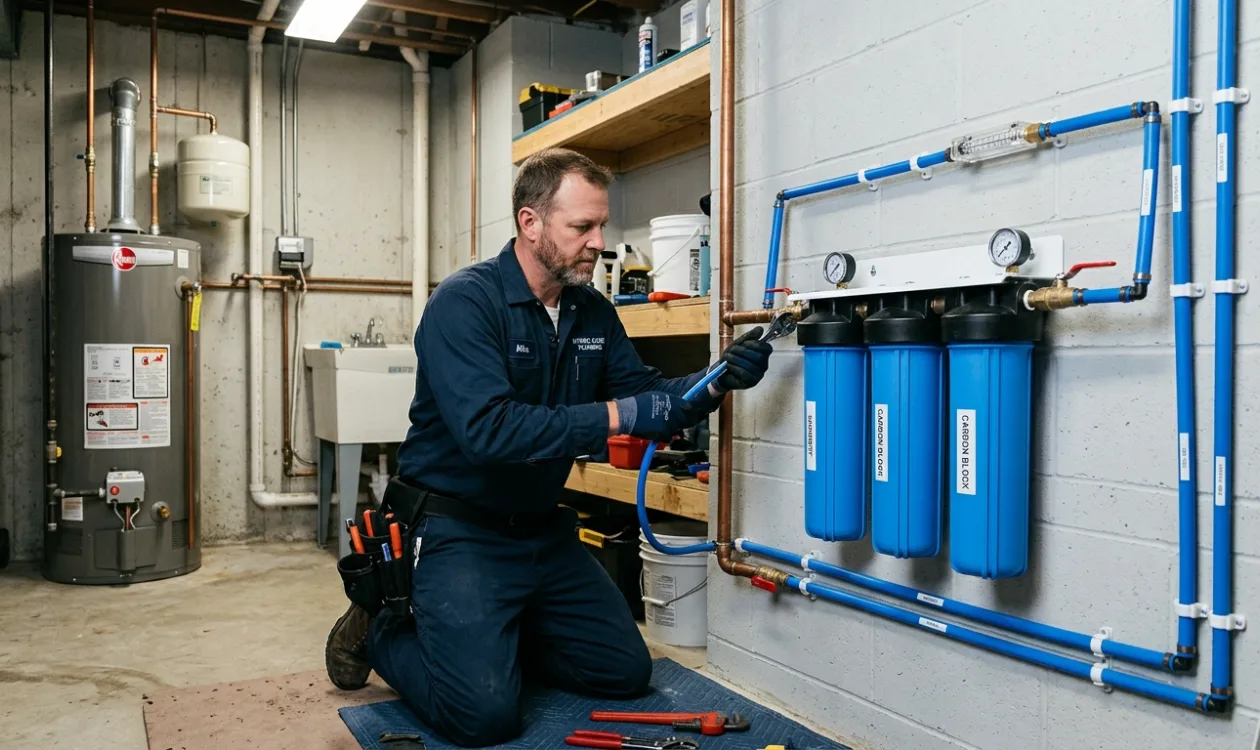
Softening and whole-house filtration sized to what you actually want to fix.
See the page
Restaurants, storefronts, offices and small industrial units, including grease lines and backflow.
See the pageA pinhole in a galvanized line does not stay a pinhole. Every hour it runs is more drywall, more flooring and more of your water bill.
Almost every plumbing decision in this city traces back to one of four facts about how Lakewood was built and what water it drinks.
 Original supply
Galvanized steel
Nearly every original Lakewood house was piped in galvanized steel. Zinc coating protects the steel for a few decades, then gives up, and the inside of the pipe begins to scale and rust. The symptoms arrive in a familiar order: rust-tinted water first thing in the morning, then hot-side pressure that drops when someone flushes, then a pinhole that sprays inside a wall.
You can chase those pinholes one at a time. Most people do, for a while. The turning point usually comes when a plumber cuts out a section and you see for yourself how little pipe is left. From there the conversation moves to whole-home repiping in copper or PEX, which is a planned, permitted job rather than a series of 2am surprises.
There is no crawlspace under a Lakewood tract home. The supply lines were run in or beneath a poured slab, which was efficient in 1951 and is inconvenient now. When one of those lines fails, the water has nowhere obvious to go, so it works sideways under your flooring and shows up as a warm spot on the tile, a musty smell in one bedroom, the sound of running water with everything shut off, or a water bill that doubled.
Finding it is a job for equipment, not guesswork, acoustic listening gear, pressure isolation, thermal imaging, tracer gas. Fixing it is a real decision: open the slab at the leak, or abandon that run and reroute new pipe overhead through the attic and down the walls. Reroute is often less destructive and often cheaper once you count the flooring. Both routes are covered on the slab leak repair and leak detection pages.
 Foundation type
Slab-on-grade
Drive any Lakewood street and look up: the parkway trees that make the neighbourhood pleasant are also the reason your sewer backs up. Those trees went in when the houses did, and their root systems have spent seventy years following the moisture gradient toward the joints in your clay or cast-iron lateral. Roots do not break into sound pipe; they find the hairline gap at a joint, thicken inside it, and then catch everything that passes.
The pattern is unmistakable once you know it: the same drain backs up roughly the same time each year, snaking clears it, and it comes back. The way out of that loop is to look inside the pipe with a sewer camera, scour it properly with hydro jetting, and then decide whether the lateral needs a spot repair, a trenchless liner, or full replacement. A liner seals the joints the roots were using, which is why it tends to end the cycle rather than postpone it.
Southern California water is hard, and much of what arrives in Lakewood has travelled a long way to get here. Dissolved calcium and magnesium drop out of solution wherever the water is heated or slowed down, which means scale accumulates in the bottom of your water heater, on tankless heat exchangers, inside faucet aerators, across shower cartridges and along the throat of angle stops. It is the reason a fifteen-year-old tank sounds like gravel in a bucket when it fires, and the reason a tankless unit installed here needs descaling on a schedule rather than when it starts complaining.
None of that is dramatic, and none of it floods your hallway. It just quietly shortens the life of every fixture and appliance in the house. Whether the answer is softening and filtration, a maintenance rhythm on the water heater, or simply knowing that your next heater should be sized and specified for hard water, it is worth a conversation before the tank decides for you.
California requires water heaters to be seismically strapped, and a surprising number of older Lakewood installations still have a single strap, a loose strap, or none at all. Separately, many houses here have never had an earthquake gas shutoff valve fitted. Both are small jobs. Both are the kind of thing a plumber will point out while they are in your garage for something else, see gas line services.
“There’s a wet patch by the hallway closet.” That is enough. We ask a few questions to work out whether it is supply, drain or gas, and how urgent it is.
Slab leaks, sewer laterals and gas work all need different equipment and different experience. You get routed to a local plumbing pro who does that work regularly.
The plumber finds the actual fault rather than guessing at it, explains your options, and gives you the full price before touching anything.
Repair or replacement, cleaned up behind them, with permits pulled and inspections arranged where the job calls for it, and a workmanship guarantee on what was done.
Different tracts, different decades, different problems. Pick your neighbourhood and you’ll get the version written for the houses on your street.
For anything actively leaking or backing up, the goal is same-day, and usually within a couple of hours. Lakewood is compact, roughly nine square miles, and the pros we refer work this side of the county, so travel time is short. When you call, say plainly that water is running or a drain is backing up; that moves you up the queue ahead of scheduled maintenance visits.
You will hear the numbers before anyone touches anything. Diagnostic work, camera runs, pressure tests, electronic leak location, carries its own price, and that price is quoted to you on the phone or at the door. Once the plumber knows what is wrong, you get the repair price in full before work begins, and nothing gets added afterwards without your say-so.
An experienced independent local plumbing professional. This site is a referral service: we take the call, work out what you are dealing with, and route you to a plumbing pro who covers your part of Lakewood and does that kind of work every week. The contractor who arrives is responsible for the work, the pricing and the scheduling.
Slow, steady pressure loss across the whole house is usually not a leak, it is corrosion. Original galvanized steel supply lines from the early 1950s scale up from the inside until a three-quarter-inch pipe has the working diameter of a pencil. A sudden pressure drop is different and more urgent: that points to a failed pressure regulator or a break somewhere between the meter and the house.
Because almost the entire city was built slab-on-grade. The water lines run inside or beneath a concrete slab poured seventy-odd years ago, with no crawlspace and no access panel. Soil movement, hard water, and decades of thermal expansion eventually open a pinhole, and the only clues are a warm patch of floor, a running meter, or a water bill that jumped for no reason.
Once you have paid for a third galvanized repair, the arithmetic usually tips. Spot repairs on a seventy-year-old system buy months, not years, because the next weak point is already thinning. A whole-home repipe in copper or PEX resets the clock on the entire supply side, restores pressure that spot fixes never bring back, and it is a planned job you schedule rather than an emergency that floods a hallway at midnight.
A cable snake punches a hole through the blockage and gets you draining again, which is exactly what you want at nine on a Sunday night. It does not remove what is lining the pipe wall. If a drain returns on a schedule, that is a sign of accumulated grease, scale or root intrusion, and the fix is hydro jetting to scour the pipe back to full bore, ideally after a camera run confirms the pipe can take it.
Repairs generally do not; replacements and alterations generally do. Water heater replacement, repiping, sewer lateral replacement, gas line work and new fixture lines are all permit territory in Lakewood, with inspection through the city’s building and safety process. A plumbing pro who works here regularly will tell you up front whether your job needs a permit and who pulls it, and will build the inspection into the schedule.
Yes. The line is answered around the clock, every day of the year, including holidays. Overnight calls are usually the serious ones, a burst supply line, a sewer backing up into a shower pan, a water heater that has let go in the garage, and those get connected immediately rather than held until morning.
Shut the water off at the main, which on most Lakewood tract homes is in a concrete box at the front parkway near the sidewalk, or at a hose-bib-height valve on the street side of the house. Turn the water heater to pilot or off so it does not run dry. Move anything absorbent off the wet floor, take photographs for your insurer, then call. Do not cut into the slab or start pulling flooring before the leak has been located.
Emergency at midnight or a dripping angle stop you have been ignoring for a month. Same number, same straight answer about what it takes to fix it.