Plumber in Lakewood Gardens
A surprising share of unexplained water bills in this part of the city trace outdoors rather than in. It is the first place worth ruling out before anyone opens a wall.
Get a Plumber to Lakewood Gardens
Reaches a local plumbing pro directly.Start outside
When a household water bill rises with no change in use, the instinct is to look for a leak indoors. Frequently it is not there. The outdoor plumbing on a house of this age accumulates a set of small, unglamorous faults that between them can waste a great deal of water without producing a single visible symptom inside the building.
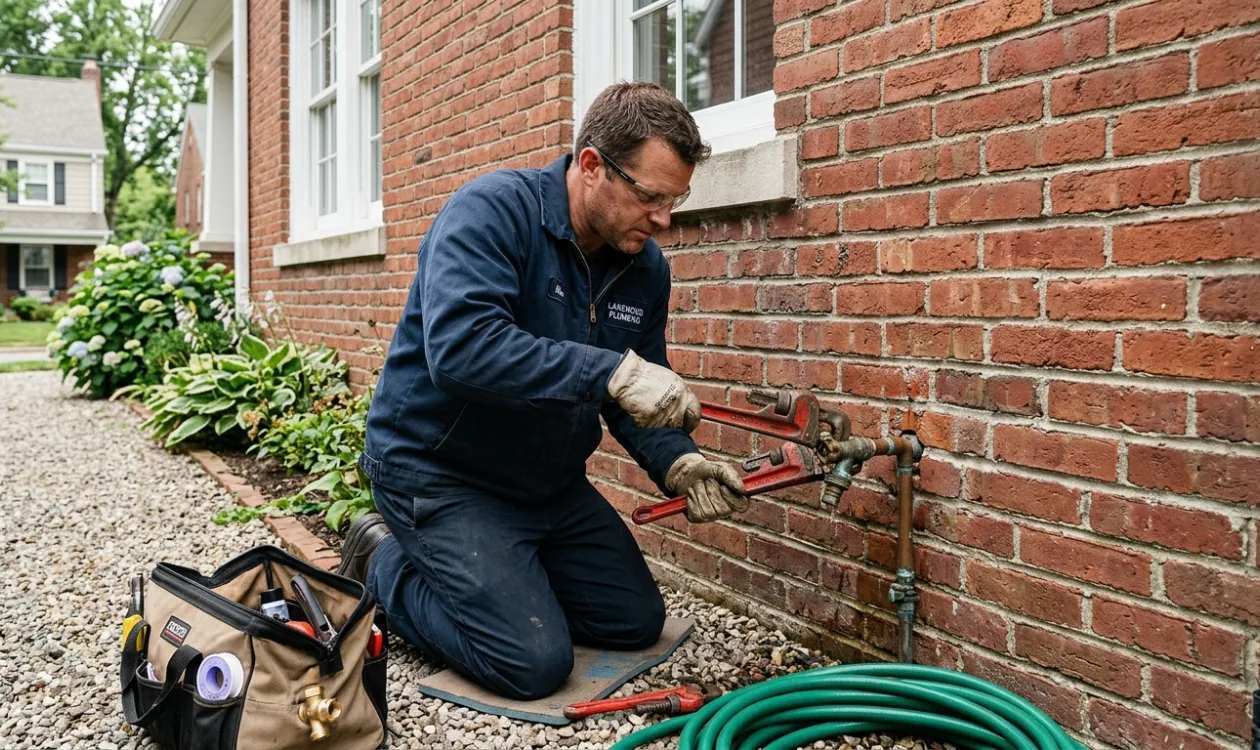
Hose bibs are the usual culprits. The washer inside degrades, the valve stem packing loosens, and a bib that weeps steadily behind a coiled hose or a shrub is invisible until someone deliberately looks. Anti-siphon devices fitted to them fail in the same quiet way. None of these is expensive to put right, and all of them can run for a year unnoticed.
Irrigation is the other. Where a sprinkler system was added after the house was built, it usually branches from the domestic supply, which means an irrigation leak reads on your meter exactly as a house leak does. A cracked lateral underground, a valve that no longer seats fully, or a head sheared off at ground level can put a lot of water into the soil without ever surfacing.
Isolating the source without guessing
The sequence is simple and worth doing before calling anyone. Shut off every fixture inside the house, then shut off the irrigation system at its own valve, then read the meter twice about twenty minutes apart. If the reading moves with everything off including irrigation, the loss is on the domestic supply. If it stops when the irrigation is isolated, the problem is the sprinkler system.
That one test tells a plumber which of two quite different jobs they are attending, and it can save you an entire diagnostic visit. If you cannot find your irrigation shutoff, that in itself is worth sorting out, because it is the valve you will most want to find in a hurry one day.
What is worth doing while someone is there
Outdoor visits are efficient to combine. Replacing tired hose bibs, fitting proper quarter-turn shutoffs where old multi-turn valves have seized, checking the anti-siphon devices, and putting a gauge on the system to record the static pressure are all short tasks individually and all sensible to do together.
Pressure is the one people skip and should not. If the incoming pressure is running high, it is quietly shortening the life of every washer, connector and valve on the property, indoors and out, and the outdoor fittings usually show it first because they are the least protected.
Two minutes on the phone often narrows it down.What Lakewood Gardens calls in most
Outdoor supply faults lead, alongside the standard indoor work these houses need.
When it is not the garden
If the meter keeps moving with the irrigation isolated, the loss is on the house supply and the search moves indoors and underground. That means the buried service run between the meter and the building, a supply line under the slab, or a fixture leaking internally where nothing shows. Toilet flappers are a common and underrated example: a fill valve cycling quietly to top up a tank that leaks past its seal can waste a substantial volume every day and makes no noise anyone notices.
A few drops of food colouring in the cistern, left for half an hour without flushing, will show colour in the bowl if the flapper is passing. It is the cheapest diagnostic in plumbing and it resolves a fair number of mystery bills on its own.
The houses themselves
Beyond the outdoor plumbing, Lakewood Gardens houses need what every house of this vintage in the city needs. Original supply pipe reaching the end of its service life. Cast iron waste lines that have narrowed with scale. Clay laterals with joints that have opened enough for roots to find. Water heaters working against hard water. None of that is alarming and all of it is predictable, which is the useful part: predictable problems can be dealt with on your schedule rather than theirs.
The one thing worth doing proactively, if you have never had it done, is a camera survey of the lateral. It is inexpensive, it either reassures you or gives you a defined problem with a known location, and both outcomes beat finding out during a backup on a holiday weekend.
Bill up and nothing obviously wrong
Isolate the irrigation, close every fixture, and watch the meter for twenty minutes. Whatever that test shows, it tells a plumber which half of the property to look at, and it is the single most useful thing you can do before making the call.
Where the outdoor plumbing meets the house
A lot of the calls from Lakewood Gardens are not really about the house at all. They are about the run between the meter and the building, the hose bibbs on the exterior walls, and the irrigation that was added, extended and patched by several different hands over the decades. That outdoor half of the system tends to be the least documented part of a property and the first place to look when the water bill moves without an obvious reason indoors.
The classic pattern is a slow rise in usage with nothing visible above ground. A buried supply line leaking into sandy soil can run for months without ever surfacing, because the water simply goes down rather than up. The way to test it is to shut every fixture in the house, close the irrigation, and watch the meter. If the dial is still moving, the loss is on your side of the meter and it is worth locating properly before anything gets dug.
Irrigation adds its own failure modes. A valve that does not fully close will weep continuously, a cracked lateral under a lawn shows as a green patch that stays green, and a backflow device that has aged out can fail in a way that is quiet but matters. None of these are dramatic, and all of them cost money steadily.
Hose bibbs are worth a look at the same time. They take physical abuse, they sit at the point where the pipe leaves the conditioned space, and a bibb that drips at the stem will usually be wetting the wall behind it long before anyone notices staining inside. It is a small part and a short job, and it prevents a much larger one. Worth checking each one on the property at the same time rather than only the one that started dripping, since they were all fitted at the same age and they tend to fail in the same order.
Water where it should not be, indoors or out
Same-day attendance across Lakewood Gardens for leaks, bursts and blockages.
Lakewood Gardens plumbing questions
More than people expect, because it runs continuously and nobody sees it. A steady weep adds up to a meaningful volume across a billing period, which is why a bib that is visibly wet is worth fixing promptly even though the repair itself is small.
If the sprinkler system is fed from the domestic supply, which is the usual arrangement on retrofitted systems, then yes, every drop it loses is metered as house use. Isolating the irrigation and re-reading the meter is how you separate the two.
Put a few drops of food colouring into the cistern, leave it for half an hour, and do not flush. If colour appears in the bowl, the flapper or seal is passing water. It is a cheap test and it explains a surprising number of unexplained bills.
Usually not. It is most often a worn washer or packing, and on an old seized bib the practical answer is to replace the whole fitting with a modern quarter-turn valve. Both are short jobs, and doing several at once on one visit is the efficient way to handle them.
It is a reasonable precaution for a longer absence, and it is also a good test of whether your main shutoff works, which on houses of this age is frequently the discovery. If the valve will not turn or will not seal, get it replaced. It is the valve you will need most on the worst day.
It prevents water being drawn backward from a hose into the drinking supply, which matters if a hose is ever left in a pool, a bucket or a container of anything. They fail quietly and dribble, which is often the first sign one needs replacing.
Yes, routinely. Water follows the path of least resistance through soil and along the outside of pipe, so a wet patch or a spot of unusually green lawn can be some distance from the actual failure. It is exactly why acoustic location beats digging where the water shows.
Yes. It stresses every washer, flexible connector and valve continuously, and outdoor fittings and toilet fill valves usually show it first. Checking the static reading with a gauge on a hose bib takes a minute, and a worn regulator is an inexpensive component to replace.
On a house of this age it is a reasonable piece of preventive spending, particularly if there are mature trees on the property. Either you get a clean recording and stop worrying, or you find a defect early enough to plan the repair instead of reacting to a backup.
Emergencies are routed for same-day attendance at any hour. Planned work such as outdoor fitting replacement, pressure checks and camera surveys is typically scheduled within a few days.
Nearby neighbourhoods we cover
Find out where the water is going
Leak detection, outdoor repairs, drains and water heaters across Lakewood Gardens.